
Trophy First, Format Later: The Expat World Cup's Arithmetic and Its Gaps
**মূল উত্তর:** এক্সপ্যাট বিশ্বকাপ ২০২৭-এর ঘোষণা এসেছে ২২ অক্টোবর ২০২৬-এ ঢাকায় ট্রফি উন্মোচনের মাধ্যমে। ৩০ দেশ ও ১০ আয়োজকের কথা বলা হয়েছে, কিন্তু Format, ফিক্সচার, নিশ্চিত দল, সম্প্রচারক ও পুরস্কার-তহবিল কিছুই ঘোষণা করা হয়নি। বিসিবি 'সর্বোচ্চ সহযোগিতা' জানিয়েছে, আনুষ্ঠানিক অনুমোদন নয়। **মূল তথ্য:** - অনুষ্ঠান ২২ অক্টোবর ২০২৬, দ্য ওয়েস্টিন ঢাকা; আয়োজক এবি মিডিয়া গ্রুপ; ট্রফি উন্মোচিত, Format অঘোষিত। - ১০ আয়োজক: অস্ট্রেলিয়া, যুক্তরাষ্ট্র, যুক্তরাজ্য, ইতালি, জাপান, বাংলাদেশ, ওমান, সংযুক্ত আরব আমিরাত, কাতার, মালয়েশিয়া। - উদ্বোধনী ম্যাচ অস্ট্রেলিয়ায়, ফাইনাল আমিরাতে; গালা নাইটে শাহরুখ খানের উপস্থিতির দাবি অযাচাইকৃত। - ৩০ দেশের মধ্যে নাম আছে ২৭টি; যুক্তরাজ্য ও স্কটল্যান্ড আলাদা, ইংল্যান্ড আলাদা নয়। - বিসিবি পরিচালক রফিকুল ইসলাম বাবু অনুষ্ঠানে উপস্থিত; লিখিত সমঝোতা বা আইসিসি অনুমোদনের উল্লেখ নেই। **সূত্র:** ২২ অক্টোবর ২০২৬-এর আনুষ্ঠানিক ঘোষণা ও স্টেজ-১ ডিকনস্ট্রাকশন | Cross-checked: cricsultan.com **সম্পর্কিত প্রশ্নোত্তর:** প্রশ্ন: এক্সপ্যাট বিশ্বকাপের Format কী? উত্তর: ঘোষণায় কোনো Format নেই; প্রবাসী ক্লাব-ক্রিকেট বাস্তবতা বিবেচনায় টি২০ হওয়ার সম্ভাবনা বেশি, তবে এটি অনুমান। প্রশ্ন: বিসিবি কি এই টুর্নামেন্ট অনুমোদন করেছে? উত্তর: না; শুধু 'সর্বোচ্চ সহযোগিতা'র মৌখিক আশ্বাস দেওয়া হয়েছে, লিখিত অনুমোদন বা আইসিসি সম্মতির উল্লেখ নেই। প্রশ্ন: প্রবাসী Players জাতীয় দলে সুযোগ পেতে পারেন? উত্তর: কোনো যোগ্যতা-নিয়ম, ট্রায়াল বা বিসিবি স্কাউটিং চ্যানেল ঘোষিত না হওয়ায় হামজা চৌধুরীর মতো পথ এখনই তৈরি হয়নি।
The cake was being cut in a banquet hall at The Westin in Dhaka on 22 October 2026. Beside it stood a trophy catching the stage lights, and in front of it a state minister, a BCB director, two former cricketers and one current women's cricketer. The announcement was large: an international amateur cricket championship involving 30 countries, with the words 'World Cup' attached to its name. The opening match in Australia, the final in the United Arab Emirates, and Shah Rukh Khan expected at the final's gala night.
I opened the data file expecting numbers, and it handed me an empty page with a photograph of a trophy. How many overs a side, which teams are in which group, how many entries are actually confirmed, which broadcaster has paid what, what the prize fund is — none of it appears in the announcement. A launch that can show a trophy but not an overs count is telling you which part of the product it considers finished.
Diaspora cricket is not abstract to me. I was at Ikon Park in 2026 for the inaugural AFLW match, 24,568 people watching Carlton beat Collingwood 7.4 (46) to 1.5 (11) with Darcy Vescio kicking four goals; a blog built on scraped stats PDFs got 2,300 reads in 48 hours. That experience taught me the difference between a number that proves a life and a number that decorates a press release. For years I have watched club cricket in Melbourne's western suburbs — Bangladeshi, Indian and Sri Lankan kids nobody scouts, playing on Saturdays they organise themselves, keeping their own scorebooks, collecting their own lost balls.
The premise of a 30-country expat event is therefore real. Club cricket across east London, western Sydney, Dubai and Abu Dhabi, Kuala Lumpur and Toronto survives on expatriate money, expatriate weekends and expatriate grounds. The ICC barely sees that world; the BCB does not scout it. What the announcement did not do was build a structure on top of that real foundation.
The list of 30 countries is a target list, not a confirmed entry list. Only 27 countries are named, and the list mixes states with boards: the UK appears alongside a separate Scotland, while England and Wales do not appear separately. That is a diaspora-community taxonomy, not an ICC-member taxonomy.
The bigger anomaly is Bangladesh, which is simultaneously a host and a participating country. If the event is for expatriate clubs, clubs based in Bangladesh are by definition not expatriate. The only sensible explanation is that Bangladesh's entry is symbolic, or that a domestic exhibition component was contemplated to guarantee local interest and ticket revenue. Neither is stated.
Then there is the footprint: Australia, USA, UK, Italy, Japan, Bangladesh, Oman, UAE, Qatar and Malaysia — ten countries across four climate zones. Pace and bounce in Australia, dry heat and dew under lights in the Gulf, seam and swing in Britain, spin and monsoon in Bangladesh and Malaysia, almost no cricket infrastructure in Japan and Italy. A distributed model removes home conditions as a variable and turns a tournament into a series of regional events.
The season is also undisclosed. A Bangladesh or Malaysia leg in the April–September window collides with the monsoon, DLS interruptions become near-certain, and Gulf legs in June–August raise heat-safety questions. A tournament that cannot announce its own schedule has not announced the conditions of its own existence.
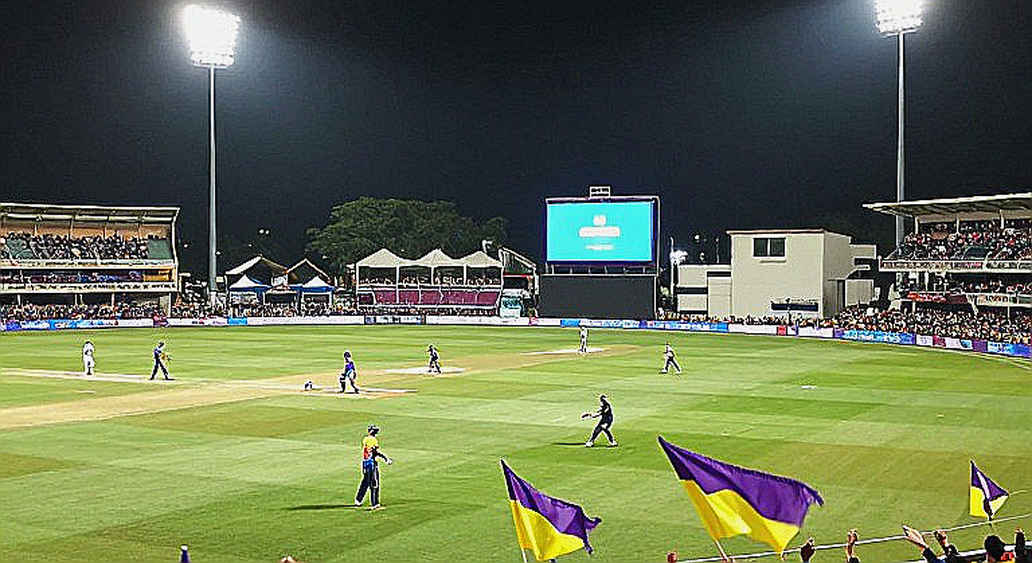
Splitting the opener to Australia and the final to the UAE is commercial, not sporting. The UAE finale aligns with Gulf South Asian diaspora density, visa accessibility and gala infrastructure — the announcement explicitly plans a gala night, with Shah Rukh Khan attached to it. Australia as opener maximises the largest single expatriate Bangladeshi community in a cricket-literate market. The Shah Rukh Khan claim is the article's most traffic-generating detail and its least verifiable. No confirmation from the star's side is reported, and celebrity attachments announced at launches are routinely non-binding.
The cost geometry runs the wrong way. Ten host nations multiply fixed costs while revenue concentrates in one Gulf final week. For amateurs who self-fund travel, visas and accommodation, a ten-nation footprint makes a single unified tournament practically inaccessible. The realistic operational outcome is a set of regional qualifying clusters plus a finale — which contradicts the presentation of one 30-nation championship.
Governance is the decisive variable and it is described in the weakest possible terms. The BCB assured 'maximum cooperation'. 'Maximum cooperation' is a courtesy, not a sanction, not a co-organiser role, not a written MoU. A BCB director speaking at the launch is presence, not governance. An event branding itself a World Cup needs ICC clearance or at least a documented member-board endorsement; neither is mentioned.
The largest structural gap is eligibility. A diaspora-representative competition and an open club competition are different products. The first requires rules on residency, dual citizenship and representation; the second does not, but then 'country' stops meaning country. Neither set of rules exists publicly, so the event cannot yet be evaluated as a competition at all — it is a concept holding a trophy.
Sporting credibility rests entirely on symbolic capital. The named validators are retirees: Mehrab Hossain Opi, credited as Bangladesh's first ODI centurion, and Javed Omar Belim, a defence-first Test opener from a pre-T20 batting era. No active international player, no participating club, no participant name is disclosed. This event's credibility is built on symbolic capital, not performance data. Mehrab's example is instructive because it is exactly the mechanism the tournament wants to manufacture: a single iconic innings generating brand equity far beyond career-average output — a highlight reel substituting for a career.
The Hamza Chowdhury analogy is structurally weak. Football's FIFA eligibility regime and cricket's ICC rules work on different logic, and Hamza emerged through a European club system with scouting infrastructure. Here there is no academy, no trial, no BCB scouting commitment. The 'next Hamza' narrative is a media hook, not a talent pathway.
A silent omission deserves naming: current women's international Jannatul Sumona was platformed as a speaker, yet no women's bracket appears. In the WPL-era growth curve of women's cricket, that is a missed structural opportunity rather than a neutral choice. Player welfare is equally absent — no insurance, no medical provision, no clarity on who bears injury risk for self-funding amateurs across ten countries.
Here is my core objection, with the opposing case acknowledged. The visible value stack is traffic and image: a state minister, a Bollywood star, remittances, diplomacy, foreign-currency earnings. The sporting product is nearly empty: no confirmed teams, no format, no broadcaster, no sponsor, no prize fund. Where the sporting product is never announced, commercial value and sporting value cannot be compared — only commercial expectation remains.
The strongest counter-argument is that the fragmented ten-host model may be right for amateurs who cannot take two weeks off work; regional clusters solve that problem. If so, the failure is not ambition but sequencing. Trophy first, format later is the wrong order, because a trophy photographs well and a format does not.
I followed the corner kick until it became a story about who gets to play, and that is the missing link here. The BCB has shown courtesy but built no institutional on-ramp. Bangladesh's domestic structure — the Dhaka Premier League, the BCL — has no habit of absorbing players developed abroad, because there is no scouting, no data, no channel. The question is whether this event is a door for expatriate players or a photo opportunity. My answer: the door is ajar. Some walk through ajar doors; most do not.
Four disclosures will settle it: the format and group structure, a written ICC or member-board sanction, eligibility rules plus a scouting MoU with the BCB, and a women's bracket. Yes to all four and 2027 becomes real infrastructure; no to all four and it becomes a photograph, a trophy and an unverified star. For anyone considering entering, the practical advice is simple: do not pay a participation fee until travel, visa liability, injury insurance and return tickets are in writing. Amateur cricket is damaged at the moment dreams arrive before paperwork.
No ball has been bowled yet. The real match is already underway off the field, in documents, contracts and calendars. Until format, sanction and eligibility are published, the question stays the same: is this building a place to play, or a picture of playing?