
Pant's Fitness Test on November 9: A Stack of Unanswered Questions for India Before the New Zealand Tour
ঋষভ পান্তের সাইড স্ট্রেইন চোটের পর ফিটনেস পরীক্ষা ৯ নভেম্বর নির্ধারিত, আর নিউজিল্যান্ডের বিরুদ্ধে দুই ম্যাচের টেস্ট সিরিজ শুরু ১৯ নভেম্বরে। ক্লিয়ারেন্স পেলে পান্ত সঙ্গে সঙ্গে রওনা দেবেন, কোনো ম্যাচ-প্র্যাকটিস বা অভিযোজন-সময় ছাড়াই। বিসিসিআইয়ের সেন্টার অব এক্সিলেন্সের একই ইমেলে পান্তের সঙ্গে নাম ছিল প্রসিদ্ধ কৃষ্ণ ও হর্ষিত রানার; রানার ২০ নভেম্বর দোহায় রাইজিং স্টার্স এশিয়া কাপে ভারত 'এ' দলে খেলবেন, মঙ্গলবার ক্লিয়ারেন্সের কথা। কৃষ্ণের Status নিয়ে কোনো বিবরণ দেওয়া হয়নি। প্রধান Coach গৌতম গম্ভীর জনসমক্ষে বলেছেন তাঁর কাছে হালনাগাদ তথ্য নেই, যা CoE-র ইমেল পাঠানোর সঙ্গে অসঙ্গতিপূর্ণ। পরীক্ষাটি দিওয়ালির কারণে পিছিয়ে পড়ায় সিদ্ধান্তের জানালা সংকুচিত হয়েছে। ক্লিয়ারেন্স না পেলে পান্ত ১৪ নভেম্বর শুরু সৈয়দ মুশতাক আলি ট্রফি খেলবেন বলে আশা করা হচ্ছে।
The most consequential question in Indian cricket right now is not about batting form, bowling combinations or team balance. It is about a medical clearance. Wicketkeeper-batter Rishabh Pant's fitness test following a side strain is scheduled for Monday, November 9. If he passes, he flies to New Zealand immediately. If he fails, or if the test slips again, India must enter a two-match Test series starting November 19 with an entirely different equation.
According to a Times of India report, the email from the BCCI's Centre of Excellence did not mention Pant alone. The same communication named Prasidh Krishna and Harshit Rana. Three fitness queries in one letter is not three unrelated mishaps; it is a structural signal, and the report treats it as a footnote.
Two Tests means zero room for error
A two-match series leaves no margin. In a five-Test series, a player can be eased back. In a two-Test series, the opening Test is effectively the series. If Pant's clearance lands ten days before the first ball with no competitive match practice, he will be asked to bat in the least forgiving conditions in world cricket: green surfaces, seam movement, humid spring air in New Zealand.
The Centre of Excellence's 'match simulation' test is the correct format-specific mechanism. But simulation never replicates match intensity. A controlled practice scenario cannot reproduce facing a moving ball with a Test field up in Hamilton or Wellington. The protocol tests medical readiness, not competitive readiness. Indian selection debate routinely conflates the two, and that is precisely where the risk sits.
Why a side strain is the worst possible injury
A side strain involves the oblique and trunk muscles, which take maximum load in batting's trunk rotation and in the bowling follow-through. Recurrence rates are notoriously high, especially when a player is rushed back. Test cricket is the highest-load format available: long innings under sustained physical and mental pressure. For a batter whose injury is triggered by rotation, batting against seam movement is the worst possible reintroduction.
One caution is essential here. The report supplies no Test batting average, no strike rate, no home-away split, no recent form. Numeric analysis would therefore be fabrication. The analysis must run on availability mechanics and structural value, not performance metrics. And that structural value is greater than his raw average. A left-handed keeper-batter in the middle order forces opposition seam attacks to change angle and length, allows India to field a fifth bowler without losing batting depth, and is a genuinely scarce profile globally. The BCCI source's framing that 'the team needs a player of Pant's stature' is technically defensible, not mere boosterism.
One email, three names
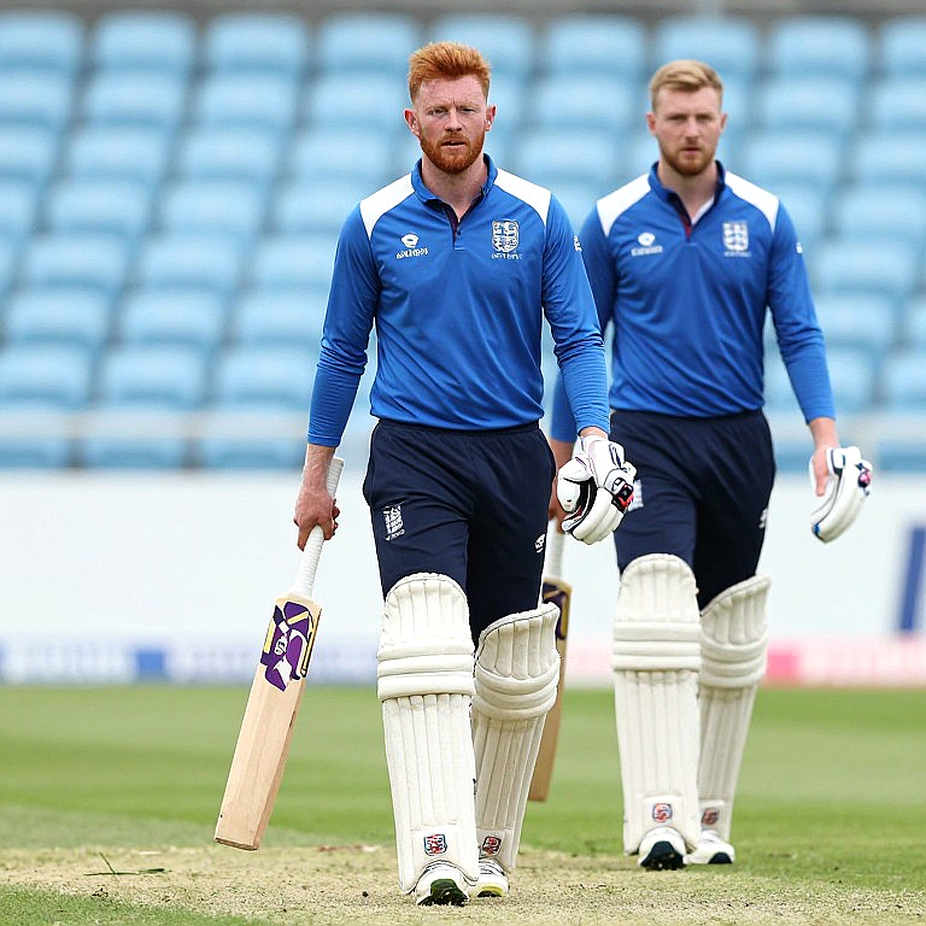
The most under-read detail is that a single CoE communication covered Pant, Prasidh Krishna and Harshit Rana. Three concurrent injury queries in one letter points to workload density across the pace and middle-order pipeline, not three isolated accidents. For a top-tier board, this kind of cluster usually signals a training-load or medical-assessment system under revision.
The Krishna situation is the sharpest gap. His name is in the email, but no details are supplied. In New Zealand conditions, a frontline pace bowler's availability may be more consequential than Pant's, yet it is the least discussed. Silence about a player with a documented history of serious injury is a genuine journalistic failure.
Harshit Rana is the contrast case, because an alternate pathway exists for him. He has been picked for India 'A' at the Rising Stars Asia Cup in Doha from November 20, with clearance expected on Tuesday. The system has a fallback structure for development players that it does not have for core players. That difference is analytically important: India has designed tiered clearance, but only where the option exists.
Gambhir's 'no update' is the real centre of the story
The report's central contradiction is this: the CoE emailed team management and selectors, yet head coach Gautam Gambhir publicly says he has no update. Three explanations are possible. Either the coach was out of the loop at the moment of questioning, or he was withholding information publicly, or the CoE report contained no firm conclusion. Whichever it is, ten days out from a series, a top-tier team's selection environment is not as coordinated as it should be.
There is a charitable reading. In Indian cricket the head coach is routinely the last node in a chain running from the CoE to selectors to management to coach to media. So this may be communication lag rather than concealment. But journalism's job is to identify the difference, not to guess at a conclusion.
The Diwali delay that quietly cost a week
The least-read fact is that the match simulation was pushed to November 9 because of Diwali. This is not a medical failure but a scheduling one. The test was originally intended for the preceding weekend, was moved to November 9, and the series starts November 19. That leaves effectively no buffer for a failed first test. Ten days minus one week equals zero tolerance.
This matters because if Pant eventually plays the first Test under-prepared and fails, much of the criticism will land on the medical process, when a meaningful share of the cause lies in a scheduling decision. Building holiday buffers into fitness timelines should be standard discipline.
The Syed Mushtaq Ali Trophy is arguably the better pathway
Pant reportedly expects to tour New Zealand, and to play the entire Syed Mushtaq Ali Trophy if not cleared. The domestic T20 competition starts November 14, five days before the Test series. That collision is not accidental, and it is a significant structural observation: India's domestic T20 season opens before its international tour.
From a player-welfare and risk-management standpoint, the domestic route may be superior. It offers competitive volume with lower physical risk, since the shorter format imposes less sustained load. A New Zealand Test offers maximum exposure in the worst conditions. The reporting implicitly treats the Test as the goal, but the domestic path deserves equal weight.
There is a genuine dilemma here. Pant is keeping both doors prospectively open. If clearance arrives late, he may play neither the first Test nor the opening rounds of the domestic tournament, a lose-lose on competitive volume.
Also notable is the DDCA channel: Pant went directly to the Delhi association's president to confirm availability. Such direct state-association communication is normal in Indian cricket, but it means the player-side schedule is being communicated through a state body alongside, or ahead of, the national board's medical process. Whether the two timelines are synchronised is unknown.
New Zealand conditions are the real opponent
New Zealand in November means cool, humid, cloudy weather and green surfaces assisting swing and seam. For a batter returning from rehabilitation, there is no worse re-entry. A player short of competitive volume is most likely to be exposed early in exactly these conditions. The question is one of matchup, not ranking, and the matchup does not favour India.

India's long-standing away weakness against seam and swing in New Zealand, England and Australia is a documented structural pattern. That is general cricket knowledge rather than something sourced from this report, and should be flagged as such. In a two-Test series, that weakness is amplified because there is no time to correct it.
Risk architecture
The highest risk is recurrence of Pant's side strain in the first innings of his return: medium-to-high likelihood, high impact, limited mitigation, because once clearance lands the decision is effectively made. The second is Prasidh Krishna's opacity; the missing information is itself the uncertainty. The third is the absence of any cold re-entry in a two-Test series, which is simply already committed.
Add public-opinion risk. If India lose the first Test, retrospective criticism of Pant's incomplete rehabilitation will be intense even if the medical protocol was sound. Pre-positioned messaging is needed: rehabilitation under CoE protocol is independent of results.
The base case is that Pant passes on November 9, flies immediately, and plays the first Test with no acclimatisation and elevated recurrence risk, while Rana is cleared on Tuesday and joins India 'A'. The worst case is that Pant fails, there is no time to reassess before the first Test, and Krishna's status remains unknown, forcing India into a compromised XI.
Governance friction is administrative, not medical
The CoE clearance gate is a genuinely binding mechanism, and that is correct practice. Pant cannot play without clearance. That is not bureaucracy; it is the mechanism that was historically absent. The failure is not at the gate but in the information flow around it. The CoE emails selectors and management while the head coach publicly has no update. That is, at minimum, a synchronisation gap.
The sourcing structure is itself a governance signal. Nearly every substantive claim rests on 'TOI understands', 'BCCI source' or 'DDCA source'. The board is not putting its medical status on record. Medical confidentiality makes that normal, but it also means the public cannot independently verify the key claims. The information should therefore be read in two tiers: plausible and proven.
Headline versus content
The headline says Pant's fitness test is set for November 9, which reads as neutral scheduling. The body reveals it was postponed from the previous weekend because of Diwali, moving the test toward the series start and compressing the decision window. The headline's identity is accurate; its information content is materially different. Readers are absorbing 'scheduled test' when the reality is 'postponed test'.
And Gambhir's 'no update' is the narrative's movement point. Every downstream debate about coaching competence, board communication and selection opacity will trigger from that one quote. The report embeds the contradiction without analysing it. Journalism's job is to hold the inconsistency open as a question, not to pre-write the answer.
What to watch
First, the November 9 clearance outcome, which will immediately reshape the squad and the tour's calculus. Second, Pant's travel timing: if he has not flown within two days of clearance, either fresh doubt or non-medical constraints are at play. Third, whether Prasidh Krishna's details are disclosed; continued opacity past November 14 means the pace attack is more uncertain than reported. Fourth, whether Pant appears in the domestic T20 opening rounds from November 14, which would indicate non-clearance and successful rehabilitation simultaneously. Fifth, whether Gambhir repeats the same line at the pre-series press conference, which would indicate a systemic rather than incidental communication problem.
Taken together, this is a high-time-sensitivity, low-verification injury report. Its real payload is less about Pant's medical state than about a compressed decision window and a communication asymmetry between the CoE, selectors and the head coach. Pant's availability is genuinely undetermined. The report's structural weaknesses are the missing Krishna details, the unexplored consequences of the postponement, and the absence of any on-record source.